
Share the circumstances, not a confirmed diagnosis
Explain which wheel is affected, how quickly the pressure changes and whether the issue began after tyre work or an impact. Mention any visible damage to the valve, without bending, tightening or dismantling it to test a theory.
A missing cap is worth mentioning, but it does not establish the cause. Repeated pressure loss needs an appropriate inspection.
Some valves are part of a monitoring system
A wheel-mounted tyre pressure sensor can be associated with the valve assembly. Its parts and servicing needs differ from those of a conventional valve, and some replacement sensors require vehicle-specific setup. The team needs to know about any TPMS warning and the vehicle details before promising particular work.
Do not assume a monitoring problem should be solved by removing the sensor and fitting an ordinary valve. Ask for a suitable assessment that preserves the vehicle's required system.
Keep the rest of the assembly in the enquiry
A tyre puncture or a problem involving the wheel can also be associated with air loss. Replacing the tyre alone is not a diagnosis of every possible leak, and a valve replacement should not be sold as a guaranteed cure without checking the source.
Tell the fitter about sealant, recent fitting or previous attempts to solve the problem. If wheel work or a different specialist service is needed, ask for that distinction to be explained before approving further costs.
Confirm what a mobile visit can include
Supply the exact vehicle, tyre specification and parked location on Skye. The team can assess whether suitable inspection, parts and equipment can be arranged. A small component does not necessarily mean an instant repair or that every sensor is available on the van.
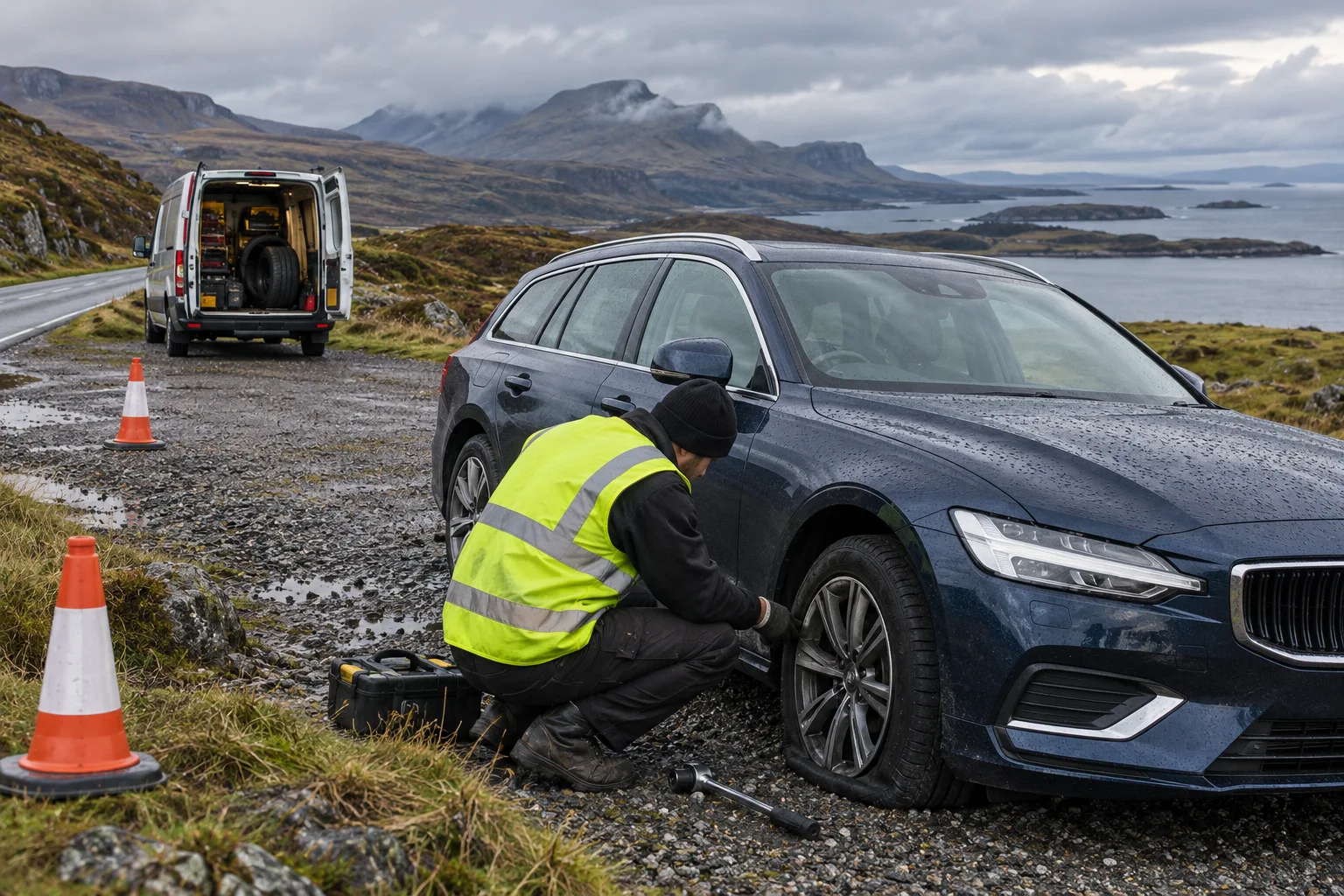
If the tyre is flat or visibly damaged, do not drive to a meeting point or treat repeated inflation as permission to continue. Give the actual position and request advice about safe assistance.
Before you book
- Affected wheel and the pattern of pressure loss.
- Any TPMS warning, valve damage or recent tyre work.
- Previous sealant or attempts to address the leak.
- Vehicle specification, actual location and access details.
Your tyres, taken care of.
Tell us where you’ve safely stopped and what your vehicle needs. We’ll check availability and confirm your quote and arrival estimate.
Your questions, answered.
Does no visible nail mean the valve is definitely leaking?
No. A hidden tyre issue or a wheel-related problem may also be involved. Inspection is needed to identify the source of the pressure loss.
Is every pressure sensor available for a mobile appointment?
No availability is assumed. Give the vehicle details and warning information so suitable parts, equipment and the scope of the visit can be checked first.
Useful sources
For further information, explore these sources.